The hardest part of a predictive maintenance programme is not the model. It is the two weeks spent redesigning the planning process so that a prediction can become an intervention.
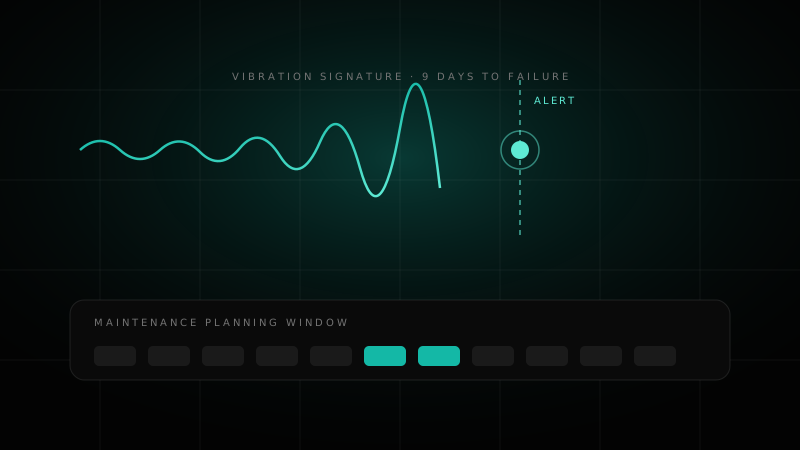
We have seen accurate models sit unused for months. The failure is not technical. The organisation was built around reactive maintenance, and a prediction arriving nine days early has nowhere to go in a system where work orders are raised when something breaks.
Prediction horizon must match planning horizon
This sounds obvious and is routinely ignored. If your maintenance planning cycle is weekly and parts procurement takes ten days, a model that predicts failure four days out is interesting but operationally useless. You cannot get the part.
Establish the planning horizon before choosing the modelling approach. It determines what data window you need, what accuracy is acceptable, and — often — whether the use case is viable at all.
The alert has to arrive somewhere that already exists
A new dashboard is where predictions go to die. Maintenance planners live in a CMMS. If the prediction does not create a draft work order in that system, with the evidence attached, it will not be acted on consistently.
Integration into the existing workflow is not a nice-to-have at the end of the project. It is the project. The model is the easy part.
Give planners the evidence, not just the score
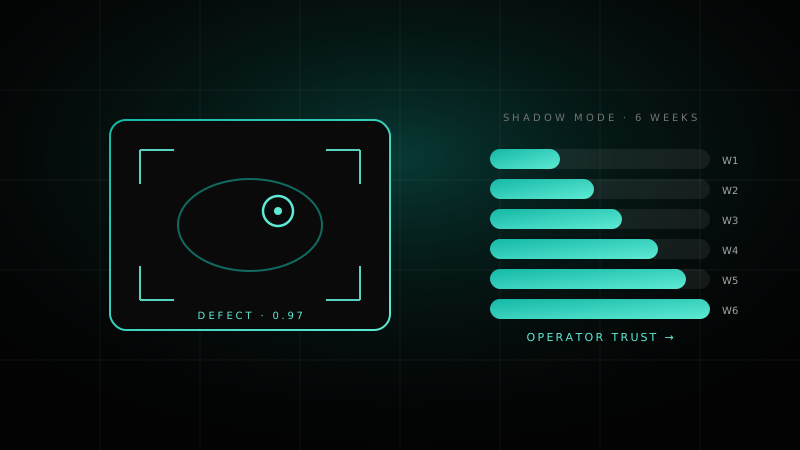
"Bearing 4 has a 78% probability of failure within nine days" is not actionable to someone who has to justify taking a line down. Show the vibration trend, the comparable historical failures, and what the model is reacting to. Planners make better decisions than the model alone when you give them the same information.
A useful diagnostic
Ask a maintenance planner what they would do if the system flagged an asset tomorrow. If the answer involves a meeting, the process is not ready. If it involves opening a work order they can already raise, it is.
Measure the operational metric, not the model metric
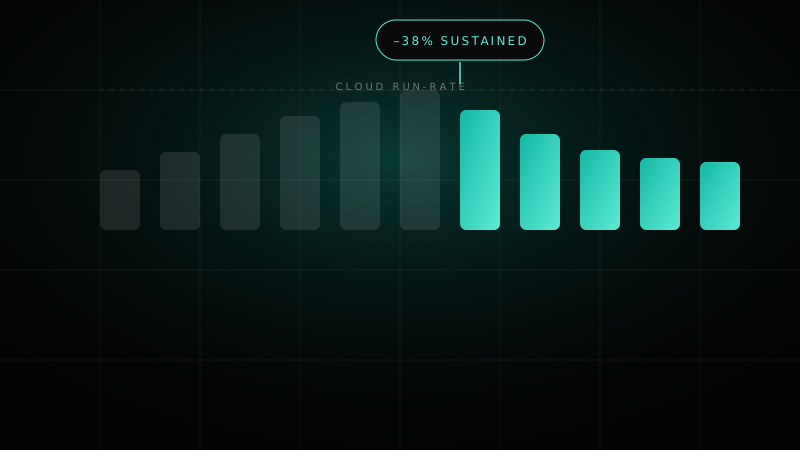
Precision and recall belong in the engineering review. The steering committee should be looking at unplanned downtime hours, emergency parts spend, and the ratio of planned to unplanned interventions. Those are the numbers that justify the investment, and they move for reasons the model cannot fully control — which is precisely why they are the right thing to watch.
What good looks like
On a stamping line we worked on recently, the successful outcome was not a better model. It was that the weekly maintenance meeting changed its agenda: predicted interventions are now discussed first, before reactive work. That single process change is what converted a model into 1,900 recovered hours a year.