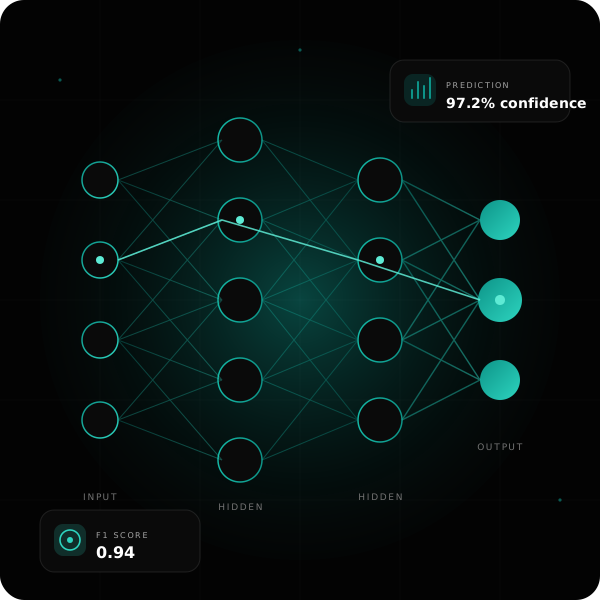
AI is where most clients start — usually on a quality gate or a maintenance problem. It's rarely where the work ends, because intelligence only holds its value when the data, platform and product beneath it are engineered properly.
The gap between an impressive demo and a system your line supervisors trust is where most AI budgets disappear. We close it — with evaluation harnesses, guardrails, fallback behaviour and shadow-mode rollouts designed in from the first sprint rather than retrofitted after a pilot impresses someone.
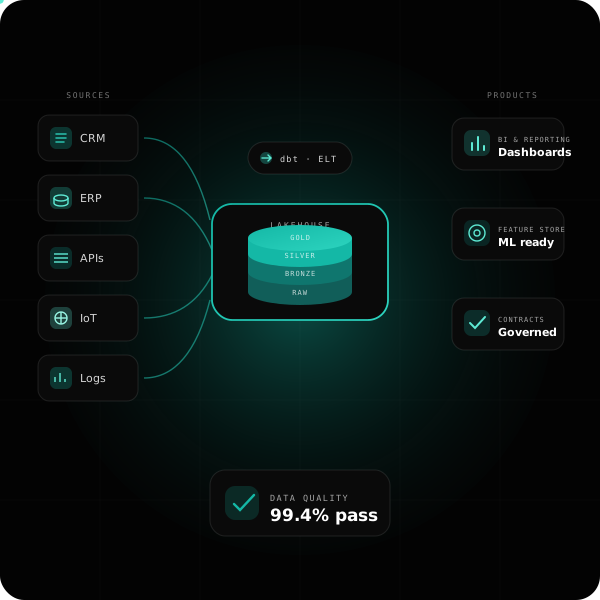
Almost every stalled AI program we've been called in to rescue had the same root cause: the data couldn't support the ambition. In manufacturing that usually means historians, MES and ERP that have never spoken to each other. We build the platforms that make plant-level analytics trustworthy and models possible.
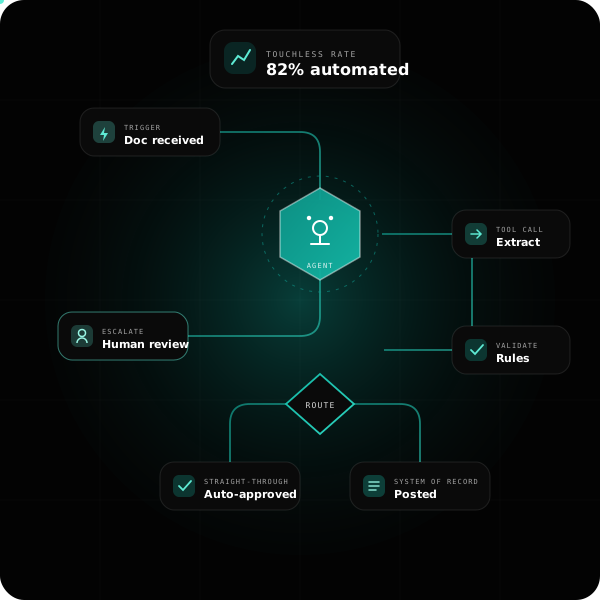
Automating a broken process just makes it fail faster. We mine what your systems say actually happens — supplier onboarding, engineering change, warranty adjudication — remove the rework, then apply agentic automation to what's left, keeping humans in the loop exactly where judgement is required.
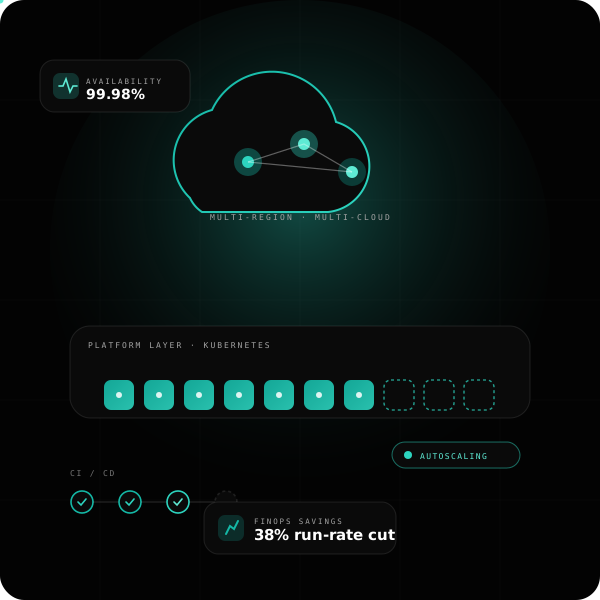
Cloud should make your engineers faster and your unit economics better. When it does neither, the cause is usually architecture and operating model rather than the provider. We fix the platform layer so teams ship without filing tickets.
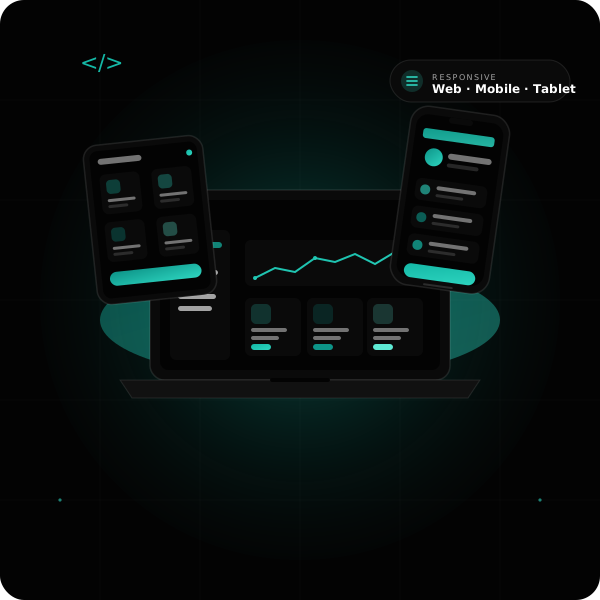
Cross-functional pods of product, design and engineering that own an outcome rather than a backlog. Increasingly, the products we build have a model at their core — which changes how you design, test and ship them.
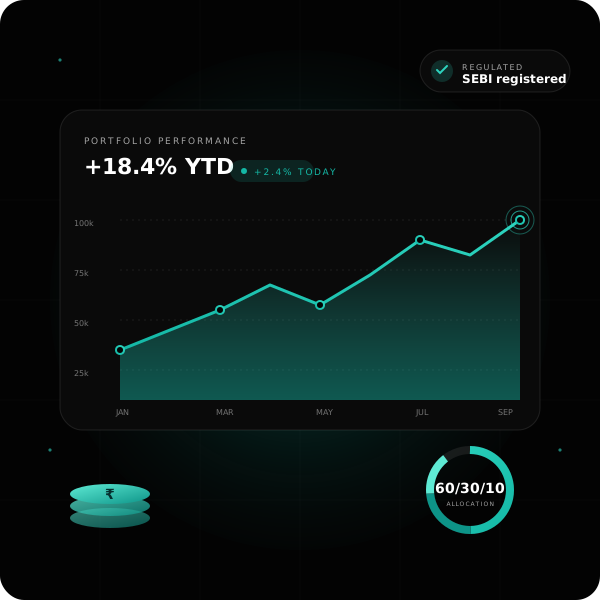
Production volumes, safety stock, incentive levels, network design — decisions where being approximately wrong is expensive. We build the models behind them with documented assumptions, quantified confidence and a validation trail your finance team can interrogate.
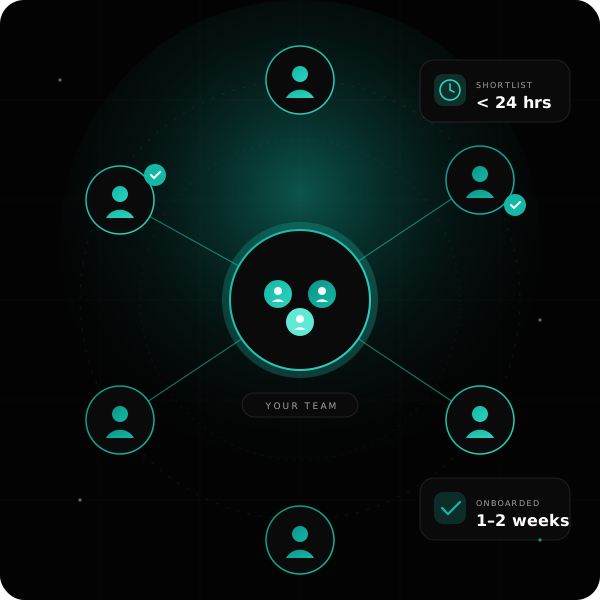
Not every problem is an AI problem. Sometimes you need experienced engineers on a deadline, a managed pod to own a workstream, or a specialist skill your market can't supply. We staff from the same senior bench that runs our consulting work.
A partner-led diagnostic separating fundable use cases from board-deck theatre.
One high-value use case from framing to production with a measured baseline.
A cross-functional squad owning a roadmap alongside your own teams.
Senior counsel on architecture, vendors and AI governance without the headcount.
Yes, and we do it regularly. A meaningful share of our opportunity sprints conclude that a process change, a rules engine or a reporting fix delivers the outcome faster and cheaper. We'd rather lose the build phase than deliver something you don't need.
We work inside your environment by default — your cloud tenancy, your access controls, your data never leaving your boundary. Where a model provider is involved we use enterprise agreements with no-training guarantees, and we can architect fully self-hosted where regulation requires it.
Opportunity sprints are fixed fee. Build engagements are priced against a defined outcome and typically run from a focused proof through to a production system over one to two quarters. Embedded pods are a monthly capacity model. We'll give you an indicative range in the first conversation rather than after three meetings.
The people you meet in the pitch. We're deliberately a senior-weighted firm — there is no junior team waiting to take over after signature, and no pyramid to feed.
Yes. We hold no reseller margins, so our platform recommendations carry no commercial bias. If the tool you already own is the right answer, we'll build on it and say so.
You own everything — code, models, documentation and runbooks. We plan a capability transfer from the start and run a 90-day post-go-live review to confirm the benefit held once we stepped back.
Tell us the decision you're trying to improve. A partner will respond within one business day with an initial view — including whether we're the right firm for it.
