Buying a cost-visibility platform is the easy part, and it is where most cloud cost programmes both begin and end. Visibility without ownership changes nothing.
The pattern is consistent. Spend grows faster than revenue. Someone escalates. A tool is procured, dashboards appear, a one-off optimisation sprint cuts fifteen percent, and within two quarters the run-rate is back above where it started. Then the cycle repeats with a different tool.
Reason one: nobody owns a number
Central platform teams can see the bill but cannot change the architecture. Product teams can change the architecture but never see the bill. The cost is therefore nobody's problem, and optimisation depends on goodwill.
The fix is unglamorous: allocate cost to the teams that generate it, at a granularity they recognise, and put it in the same review where they discuss latency and reliability. Ownership without visibility is unfair; visibility without ownership is theatre.
Reason two: optimisation is treated as a project
A sprint of rightsizing produces a real, one-time saving and no lasting change. Meanwhile every new service ships with the same defaults that caused the problem, so the saving erodes at roughly the rate the platform grows.
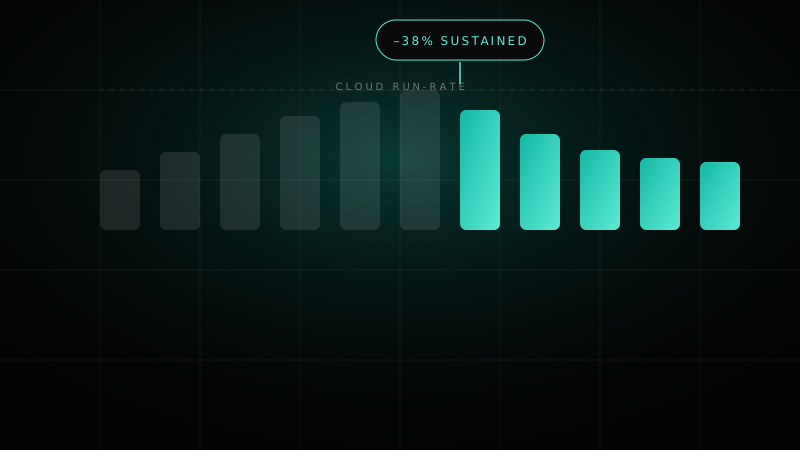
If your cost curve is a sawtooth — sharp drops after each optimisation push, steady climbs in between — you have a project, not a discipline.
Reason three: the guardrails are advisory
Documentation that says "please tag your resources" produces untagged resources. Guardrails belong in the pipeline: mandatory tags enforced at deploy, budget alerts that route to the owning team, environments that shut down outside working hours by default rather than by request.
The three we implement first
Mandatory ownership tags enforced in CI. Non-production auto-shutdown on a schedule, opt-out rather than opt-in. Per-team budget alerts routed to the team, not to a central inbox.
Unit economics beat absolute spend
Total cloud spend going up is not inherently bad — it may simply mean the business is growing. Cost per transaction, per active user, or per unit produced tells you whether efficiency is improving. Track the ratio and the conversation with finance changes from defensive to strategic.
Where the durable savings come from
In our experience roughly a third of sustainable savings come from rightsizing and commitment management, and two thirds from architecture: eliminating chatty cross-zone traffic, fixing storage lifecycle policies, removing redundant environments, and choosing managed services deliberately rather than by habit.
The first third is what tools find. The second two thirds require engineers who understand the workload — which is why FinOps is a discipline and not a purchase.