A vision system that is 99% accurate and distrusted is worth less than one that is 96% accurate and believed. Adoption is the constraint, and it is won on the floor rather than in the model.
When we deploy inspection systems, the technical work is usually complete well before the system takes any real decision. The remaining time is spent on something harder: convincing experienced people that the machine deserves a say in a judgement they have made for fifteen years.
Start in the shadows
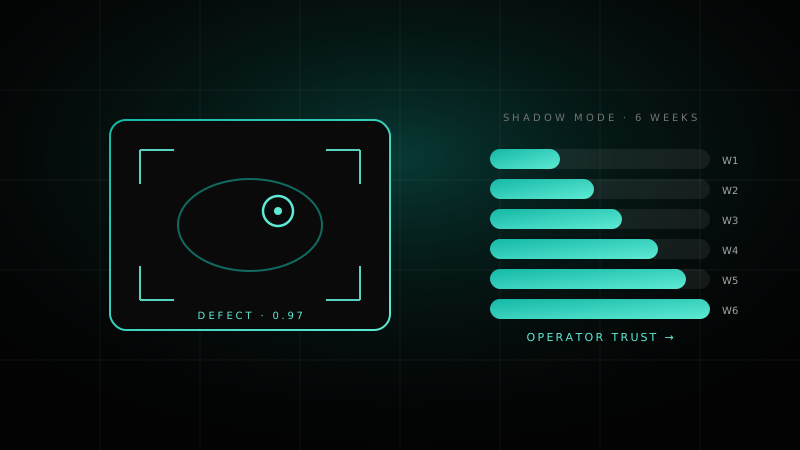
For the first six to eight weeks the system makes no decisions. It runs in parallel, records its call, and shows it next to the human call. Nothing is automated. Nothing is escalated.
This does three things. It generates a real-world evaluation set nobody had to construct artificially. It surfaces the failure modes that only appear under production conditions — glare on a fresh clearcoat, a batch of parts with unusual surface finish. And it lets supervisors watch the system be right, repeatedly, before anything depends on it.
Show confidence, always
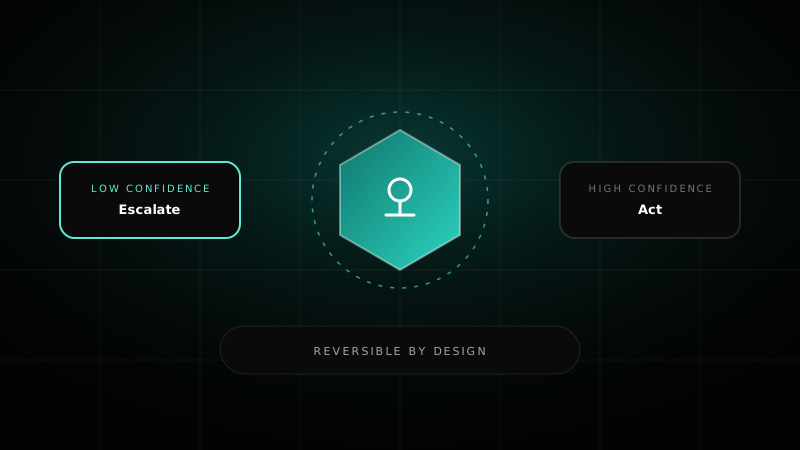
A binary pass/fail output invites disagreement and offers nowhere to go with it. A confidence score gives the operator something to reason about. High-confidence calls get accepted quickly; borderline ones get a human look. That is exactly the behaviour you want, and it emerges naturally when you expose uncertainty rather than hide it.
Systems that project false certainty get distrusted the first time they are confidently wrong. Systems that say "I am not sure about this one" get treated as colleagues.
Make the override real
An override button that logs a complaint into a void is worse than no override at all. When an operator disagrees, that disagreement should enter the evaluation set, get reviewed, and visibly influence the next model version.
On one paint line, operator overrides in the first month identified a defect class the training data barely covered. The model improved because the operators pushed back — and they knew it, which changed how they regarded the system entirely.
Design rules we hold to
Never hide the confidence. Never make override harder than acceptance. Always show what the model reacted to. And always close the loop — tell people what changed because of their feedback.
Let the supervisors set the threshold
The trade-off between false positives and false negatives is a business decision about rework cost versus escape risk. The people who own that trade-off should choose the operating point, with the curve in front of them.
Handing over that choice does more for adoption than any amount of accuracy. It converts the system from something imposed into something configured.
Go live narrowly
When the system finally takes decisions, it should do so on one defect class, one line, one shift. Expand only after a clean fortnight. A single visible failure during a broad rollout will cost more trust than months of quiet accuracy will rebuild.